JEE Main Session 1 is about to ring your doorbell, and these final days are very crucial for every aspirant. One of the important aspects that needs to be cleared perfectly is the JEE Main Dress Code 2026. The dress code plays a very important role in ensuring a smooth, fair, and secure examination process. Therefore, the National Testing Agency has clearly defined what candidates can wear and what they must avoid on the exam day. Since security checks like metal detection and frisking take place before entry, following the Dress Code criteria will help the candidates to avoid unnecessary delays and stress.
Moreover, both male and female candidates must strictly follow these rules related to clothing, footwear, and accessories. Hence, knowing the complete JEE Main Dress Code 2026 in advance allows candidates to focus fully on performance rather than last-minute confusion. Students preparing through a reputed jee coaching in guwahati are always advised to stay updated with official NTA instructions.
JEE Main Dress Code 2026: What are the Important Guidelines by NTA
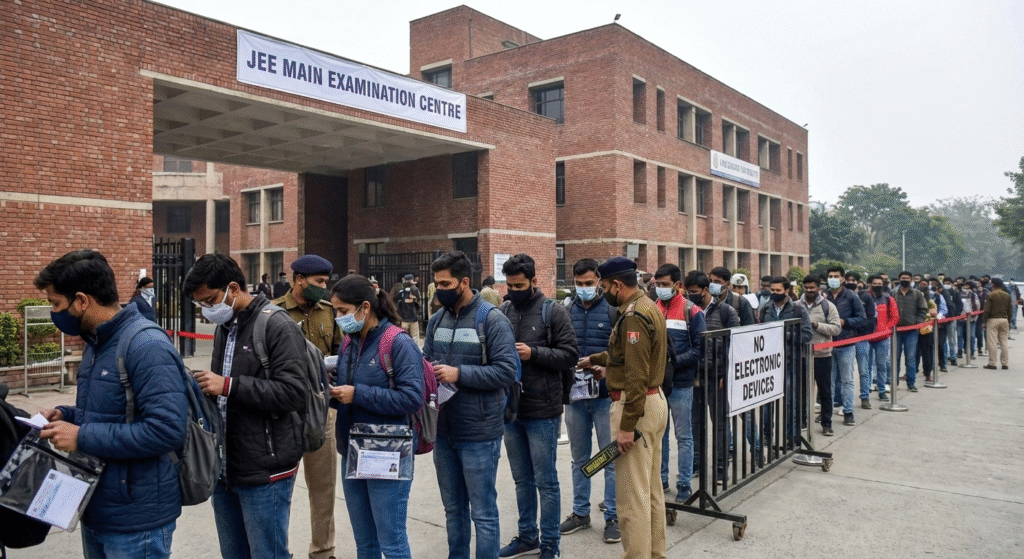
To begin with, NTA has framed the Dress Code to maintain transparency and exam integrity. As a result, candidates must cooperate during frisking and metal detector checks. Aspirants planning for iit jee advanced after JEE Main should also follow exam-day discipline strictly.
Key Instructions Under JEE Main Dress Code 2026
Here are the important instructions that every candidate needs to follow :
- First of all, you must avoid wearing all metal items, including jewellery, zippers, buttons, and accessories
- Thick-soled footwear is not permitted, so you have to wear slippers or sandals
- Moreover, the clothes with heavy buttons, embroidery, or decorative elements must be avoided
- Additionally, you must stay prepared for frisking and biometric verification
Due to these checks, simple and comfortable clothing remains the safest choice.
What is the JEE Main Dress Code for Male Candidates
Male candidates must follow the Dress Code carefully to avoid delays at the examination centre. Therefore, choosing appropriate clothing and footwear becomes essential.
Clothing Allowed for Male Candidates
- You can wear plain T-shirts or simple shirts with trousers or jeans
- Remember, your clothes must not contain any metallic zippers, badges, or decorative buttons
- Moreover, tight or uncomfortable jeans should be avoided because the exam lasts three hours
Footwear Rules for Male Candidates
There are also rules and regulations regarding footwear. Here are the listed rules for male candidates:
- Shoes with thick soles are not allowed.
- Moreover, you must wear slippers, floaters, or lightweight sandals.
Accessories Not Allowed
Do not wear or carry belts, caps, goggles, chains, rings, bracelets, or any jewellery. These items are strictly prohibited in the examination hall.
Winter Clothing Guidelines
As this is winter season, here are the clothing guidelines for winter for every candidate
- You can wear light sweaters or jackets.
- However, no metallic zippers or heavy buttons should be present in your clothes.
Hence, if you follow these rules, then you can clear security smoothly.
What is the JEE Main Dress Code for Female Candidates
Similarly, female candidates must strictly follow the JEE Main Dress Code to ensure quick entry and a stress-free exam experience. Students enrolled in a integrated 11th and 12th program are usually guided about such official rules in advance.
Clothing Allowed for Female Candidates
- You can wear simple jeans, salwar, t-shirts, or plain tops.
- Moreover, if you are wearing jeans, then they must remain free from embroidery or metallic elements
Jewellery Restrictions
There are always queries regarding the wearing of jewelry for girls. So here are jewelry restrictions for girls :
- Earrings, bangles, rings, anklets, and chains are not permitted
- Additionally, the metallic hairpins and clips are banned
- Meanwhile, you are advised to use plastic hair accessories.
Footwear Guidelines
- You must wear flat slippers or sandals.
- Thick-soled footwear is not allowed
Winter Clothing Rules
- You can wear light sweaters.
- However, metallic parts or zippers must not be present
Additional Instructions
Avoid wearing dupattas, stoles, and scarves as they require extra checking
Clarification on Undergarments
Female candidates should wear comfortable innerwear that does not interfere with frisking. Thus, simple clothing remains the safest option.
What Can You Wear and What to Avoid in JEE Main 2026?
To avoid confusion, candidates must clearly understand the do’s and don’ts of the JEE Main Dress Code.
Do’s Under JEE Main Dress Code
- Wear light, plain, and comfortable clothes
- Choose slippers or lightweight sandals
- Avoid all metal items, including belts and jewellery
Don’ts Under JEE Main Dress Code
- Do not wear thick-soled shoes
- Avoid clothes with embroidery or metallic work
- Do not wear caps, goggles, scarves, or bandanas
- Jewellery of any kind is strictly prohibited
Moreover, you should also remember that frisking takes place before and after toilet breaks to maintain exam fairness.
What are the JEE Main 2026 Exam Day Guidelines
For a smooth exam day, you must follow all instructions carefully along with the JEE Main Dress Code.
Reporting Time for JEE Main 2026 (Shift 1)
Here is the reporting time and other details for shift 1
| Session | Timings |
| Reporting Time | 7:00 AM |
| Log in to Read Instructions | 8:50 AM |
| Exam Starts | 9:00 AM |
| Exam Ends | 12:00 PM |
Reporting Time for JEE Main 2026 (Shift 2)
Here is the reporting time and other details for shift 2
| Session | Timings |
| Reporting Time | 1:00 PM |
| Log in to Read Instructions | 2:50 PM |
| Exam Starts | 3:00 PM |
| Exam Ends | 6:00 PM |
Hence, you must reach the centre at least one hour before the exam to complete verification procedures.
Documents to Carry
- Do not forget to carry the JEE Main 2026 Admit Card
- You have to also carry one passport-size photograph (2.5 × 3.5 cm)
- Moreover, carry a valid photo ID such as Aadhaar, PAN, or School ID
What are the Items Prohibited at the Exam Centre
- Mobile phones, calculators, smartwatches
- Bags, backpacks, and luggage
- Books, loose papers, or written notes
- Personal pens or pencils
- Food and beverages (except for diabetic candidates)
- Coaching institute ID cards
Are Jeans Allowed in JEE Main 2026?
Yes, jeans are allowed under the JEE Main Dress Code 2026, but certain conditions apply.
- First of all, your jeans must remain plain and free from metal parts
- Try to wear light cotton or denim jeans, which work best for comfort
- Hence, both male and female candidates can wear jeans if they meet the guidelines
Special Instructions for Diabetic Candidates
Diabetic candidates receive special permission under NTA rules. Therefore, they can carry:
- Fruits such as bananas, apples, or oranges
- Sugar tablets
- A transparent water bottle
Hence, candidates must inform the invigilator and manage their health responsibly during the exam.
Additional Tips for Following JEE Main Dress Code 2026
Here are some additional tips regarding dress code:
- Try to choose breathable fabrics according to weather conditions
- Always avoid heavy mehndi or hand coverings to ensure smooth biometric scanning
- Wear a masks only if required and avoid replacing them with scarves
- Moreover, regularly check official updates for any last-minute changes
Hence, by following these tips, you can confidently comply with the JEE Main Dress Code.
Why Following the JEE Main Dress Code Is Important
The Dress Code plays a key role in ensuring a fair and secure examination environment. When candidates follow the prescribed clothing rules, security checks move faster and more smoothly. As a result, unnecessary stress before the exam gets reduced, and candidates can enter the exam hall calmly without repeated frisking or questioning.
Moreover, adherence to the Dress Code helps avoid last-minute entry issues. In many cases, candidates wearing restricted items are asked to remove them at the gate, which creates panic and distraction. Therefore, dressing appropriately supports both mental comfort and time management on the exam day.
Seasonal Clothing Tips for JEE Main 2026
Since the January session occurs during winter, candidates often feel confused about warm clothing. According to the Dress Code, light sweaters or jackets without zippers or metal buttons are allowed. However, heavy coats, hoodies with metal drawstrings, or layered clothing may lead to additional frisking.
Hence, you should choose breathable fabrics that maintain warmth without violating rules. Dressing perfectly according to weather conditions helps maintain comfort throughout the three-hour examination.
How the JEE Main Dress Code Supports Exam Transparency
The Dress Code exists to maintain transparency and fairness during the exam. Uniform clothing rules prevent unfair advantages and ensure that no prohibited materials enter the exam hall. This system protects the integrity of the examination and creates equal conditions for all candidates. Students preparing with the best coaching institute in guwahati for jee are regularly informed about such compliance rules.
Furthermore, standardized dress guidelines simplify security arrangements across multiple exam centers. As a result, the examination process remains consistent nationwide.
What is the Role of Frisking and Biometric Checks in JEE Main
Frisking and biometric verification form an important part of the JEE Main entry process. The Dress Code supports these checks by restricting clothing and accessories that interfere with scanning. Candidates may undergo frisking multiple times, including after washroom breaks.
Therefore, wearing simple clothing ensures quick verification and reduces inconvenience during the examination. Aspirants focusing on jee advanced preparation should treat JEE Main as a disciplined first step toward advanced-level exams.
Final Tip for First-Time JEE Main Candidates
First-time candidates often underestimate the importance of the Dress Code. However, following these rules strictly prevents unnecessary stress and saves valuable time. Candidates should remember that exam preparation includes both academic readiness and compliance with exam guidelines.
By understanding and following the Dress Code, candidates ensure a smooth entry process and can fully concentrate on solving questions with confidence.
Conclusion
The JEE Main Dress Code 2026 ensures fairness, safety, and smooth conduct of the examination. Therefore, candidates who follow the dress code guidelines experience fewer delays and a stress-free entry into the exam hall. Simple clothing, proper footwear, and strict adherence to prohibited items help candidates focus fully on their performance. By clearly understanding the Dress Code, aspirants can avoid last-minute problems and approach the exam with confidence.
What is the dress code for JEE Mains 2026?
The Dress Code requires candidates to wear simple, light, and comfortable clothing without any metal parts. Clothes with heavy buttons, zippers, embroidery, or accessories are not allowed. Since candidates go through metal detection and frisking, following the dress code helps avoid delays and ensures smooth entry into the exam center.
Are jeans allowed in JEE Mains 2026?
Yes, jeans are allowed under the Dress Code, but they must remain plain and free from metallic elements. Candidates should avoid jeans with decorative buttons, chains, or zippers. Light and comfortable jeans work best, especially because the exam lasts for three hours, and comfort plays a big role in concentration.
Are shoes allowed in the JEE Mains exam?
No, shoes with thick soles are not permitted in the JEE Mains exam. According to the Dress Code, candidates must wear slippers, floaters, or flat sandals. This rule helps speed up security checks and reduces complications during metal detection at the exam centre.
Is a watch allowed in the JEE Mains exam?
No, watches of any kind are strictly prohibited in the JEE Mains exam. This includes digital watches, smartwatches, and analog watches. Time management inside the exam hall depends on the wall clock provided at the centre, so candidates should not carry any personal timekeeping devices as per the Dress Code.