
Choosing the right career after Class 12 remains one of the biggest decisions for science students. Today, PCB students career options extend far beyond traditional medical courses. Moreover, rapid growth in biotechnology, genetics, and data-driven healthcare has created exciting opportunities for students who want to work at the intersection of biology and technology.
India’s bioeconomy has grown from $10 billion in 2014 to $195.3 billion in 2025, marking nearly a 20-fold increase in just one decade. Furthermore, the government aims to build a $1 trillion bioeconomy by 2047. This remarkable growth has significantly expanded PCB students career options across healthcare, research, pharmaceuticals, agriculture, and biotechnology.
Students preparing for NEET and exploring long-term PCB students career options can also benefit from structured guidance through our NEET Coaching in Guwahati, which helps build strong foundations in biology, chemistry, and career planning.
Why Are PCB Students Career Options Expanding So Rapidly?
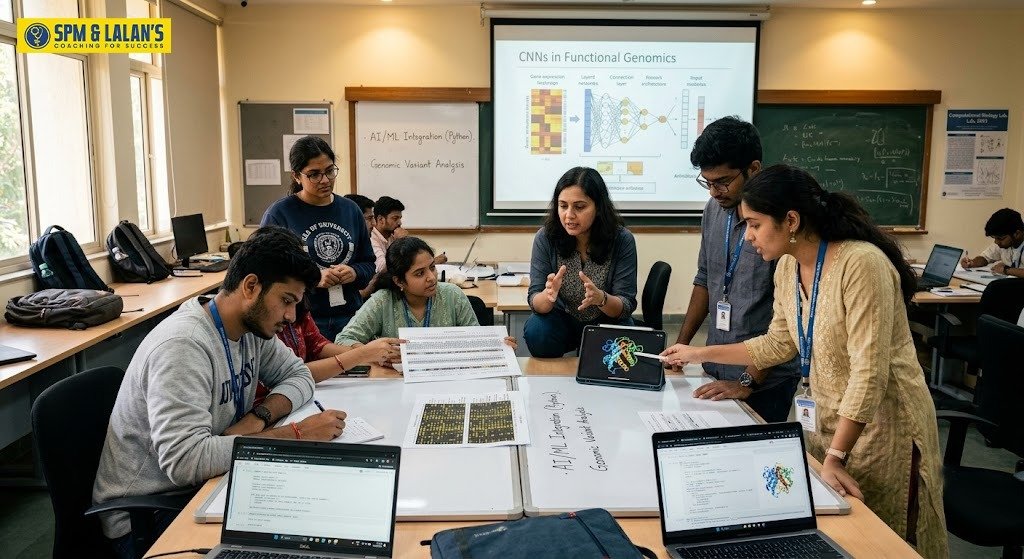
The biotechnology sector has become a national priority. Additionally, the government has introduced several policies and funding initiatives to accelerate innovation.
According to the India Bioeconomy Report 2026, India’s bioeconomy now contributes nearly 4.8% to the national GDP and supports more than 11,800 biotech startups.
Key initiatives driving growth include:
- BioE3 Policy
The policy promotes biotechnology for the economy, environment, and employment while supporting Bio-AI hubs and biofoundries across India. - ₹1 Lakh Crore Research, Development and Innovation Fund
This fund supports deep-tech sectors, including biotechnology and advanced research. - Bio-RIDE Scheme
The scheme provides financial support for biotech research, startups, and biomanufacturing infrastructure. - Biopharma SHAKTI Scheme
This initiative strengthens India’s biologics and biosimilars ecosystem.
Consequently, these developments continue to create new career options every year.
What Is B.Tech Biotechnology with AI?
B.Tech Biotechnology with AI is a four-year degree that combines biotechnology, artificial intelligence, and data science.
Unlike traditional biotechnology programs, this course prepares students to solve biological problems using machine learning, computational tools, and large datasets. Therefore, it offers highly future-ready career options.
Core subjects usually include:
- Molecular Biology and Genetics
Students learn about genes, heredity, and cellular functions. - Bioinformatics and Computational Biology
Students analyze biological data using software tools and databases. - Machine Learning for Life Sciences
Students apply predictive models to healthcare and research problems. - Bioprocess Engineering
Students study the production of biologics, vaccines, and enzymes. - Genomics and Proteomics
Students explore genetic information and protein structures. - Synthetic Biology
Students learn to design and engineer biological systems.
Why Is Biotechnology with AI in Demand in 2026?
The integration of artificial intelligence with biotechnology has transformed healthcare, agriculture, and pharmaceutical research.
Moreover, the BioE3 policy plans to establish bio-AI hubs, biofoundries, and advanced biomanufacturing facilities across the country.
Additionally, Union Minister Dr. Jitendra Singh stated that combining AI with biotechnology can improve diagnostics, speed up drug discovery, and enhance gene sequencing accuracy.
Therefore, PCB students career options linked to biotechnology and AI are expected to grow significantly over the coming years.
What Jobs Can Students Pursue After B.Tech Biotechnology with AI?
Graduates can work across multiple industries where biology and technology intersect.
| Job Role | Primary Responsibilities | Average Salary |
| Bioinformatics Analyst | Analyse genomic and proteomic data | ₹4–8 LPA |
| AI Drug Discovery Researcher | Identify potential drug candidates using AI | ₹10–18 LPA |
| Biodata Scientist | Work with large biological datasets | ₹4–8 LPA |
| Bioprocess Engineer | Optimise biologics manufacturing | ₹10–18 LPA |
| Clinical Data Analyst | Interpret clinical trial data | ₹5–10 LPA |
| Precision Medicine Analyst | Develop personalised treatment plans | ₹12–20 LPA |
| Regulatory Affairs Specialist | Ensure product compliance | ₹6–12 LPA |
| Synthetic Biology Engineer | Design biological systems | ₹20–40 LPA |
These roles clearly demonstrate how modern career options continue to evolve beyond conventional paths.
Which Industries Hire Biotechnology and AI Graduates?
Several sectors actively recruit professionals with biotechnology and AI expertise.
- Pharmaceutical Companies
These companies use AI for drug discovery, biosimilars, and clinical research. - Healthcare and Diagnostics
Hospitals and healthcare firms apply genomics and precision medicine technologies. - Agricultural Biotechnology
Companies develop climate-resilient crops and food security solutions. - Biomanufacturing
Industries produce enzymes, biofuels, and sustainable materials. - IT and Global Capability Centres
Organisations hire life sciences, data specialists, and bioinformatics professionals. - Government Research Labs
Institutions such as DBT, BIRAC, CSIR, DRDO, and ICMR conduct advanced research.
India has more than 665 US FDA-approved manufacturing plants and over 1,400 WHO-compliant facilities, creating strong demand for skilled biotechnology professionals.
What Are the Best Genetics Careers for PCB Students?
Genetics has emerged as one of the most promising fields among PCB students career options.
Popular genetics careers include:
- Genetic Counsellor
Professionals guide patients about inherited conditions and genetic testing. - Genomics Research Scientist
Researchers study genes and develop advanced treatment approaches. - Clinical Geneticist
Specialists diagnose and manage genetic disorders. - Molecular Biologist
Scientists investigate cellular functions and genetic mechanisms. - Precision Medicine Specialist
Experts create personalised treatment strategies using patient data. - Gene Therapy Researcher
Researchers develop therapies that target specific genes.
What Skills Do Students Need for Biotechnology and AI Careers?
Employers increasingly seek candidates who combine biology knowledge with technical expertise.
Important skills include:
- Bioinformatics
This skill helps students analyse large biological datasets efficiently. - Machine Learning
Knowledge of predictive models improves research capabilities. - Genomic Data Analysis
Students learn to interpret complex genetic information. - PCR and CRISPR Techniques
These laboratory methods remain essential for biotechnology research. - Data Visualisation
Clear presentation of biological data improves decision-making. - Problem Solving
Analytical thinking supports innovation in healthcare and biotechnology.
Strong technical skills further strengthen PCB students career options and improve employability.
Which Programming Languages Should Biotechnology Students Learn?
Programming skills play an important role in biotechnology careers.
- Python
Python supports machine learning, bioinformatics, and data analysis. - R Programming
R helps students perform statistical analysis and visualise data. - SQL
SQL enables efficient management of biological databases. - Biopython
This library simplifies genomic and sequence analysis. - TensorFlow
TensorFlow supports machine learning applications in biotechnology. - Galaxy Platform
This platform helps researchers analyse biological data efficiently.
Students with programming skills often earn 25% to 35% higher salaries than graduates with only biological knowledge.
Is B.Tech Biotechnology with AI Better Than Traditional Biotechnology?
For students seeking future-ready careers, the answer is often yes.
| Feature | Traditional Biotechnology | Biotechnology with AI |
| Core Focus | Biology and laboratory work | Biology, AI, and data science |
| Industry Readiness | Moderate | High |
| Entry-Level Salary | ₹3–6 LPA | ₹4–8 LPA |
| Career Scope | Research and quality control | Bioinformatics, AI research, precision medicine |
| Future Demand | Stable | Very high |
Therefore, students exploring advanced career options may find biotechnology with AI more aligned with future industry needs.
What Is the Eligibility for B.Tech Biotechnology with AI?
Most universities follow similar eligibility criteria.
- Educational Qualification
Students must complete Class 12 with Physics, Chemistry, and Biology or Mathematics. - Minimum Marks
Most institutions require 50% to 60% aggregate marks. - Entrance Examinations
Admission may depend on JEE Main, CUET, or university-level entrance tests.
Both PCB and PCM students can apply for many biotechnology programs.
What Does the Future Hold for Biotechnology and AI in India?
India aims to build a $300 billion bioeconomy by 2030 and a $1 trillion bioeconomy by 2047.
Several major initiatives are already underway:
- Bio-AI Hubs
These centres combine artificial intelligence with biotechnology research. - National Biofoundry Network
Six specialised biofoundries support advanced biomanufacturing. - 95 Bio-Incubators
These facilities support thousands of biotech startups. - DBT-ICGEB Biofoundry
This centre uses automation and AI to accelerate innovation.
As these initiatives expand, PCB students career options will continue to grow across research, healthcare, agriculture, and technology. For more guidance on career planning, entrance examinations, engineering and medical admissions, and emerging science fields, visit SPM & Lalans for the latest student resources and expert insights.
Conclusion
The future of biotechnology, genetics, and artificial intelligence offers exciting possibilities for science students. Today, PCB students career options extend far beyond medicine and dentistry. Moreover, India’s rapidly growing bioeconomy, government support, and increasing industry demand have created strong career opportunities across multiple sectors.
Students who combine biological knowledge with data science, programming, and analytical skills can build successful careers in emerging fields such as bioinformatics, precision medicine, genomics, and synthetic biology. Therefore, 2026 presents an excellent opportunity to explore these fast-growing career paths.
Frequently Asked Questions
Which industries are hiring Biotechnology and AI graduates in India and abroad?
Pharmaceutical companies, healthcare organisations, agricultural biotechnology firms, biomanufacturing companies, IT firms, and government research laboratories actively hire biotechnology and AI graduates. Internationally, opportunities continue to grow in drug discovery, genomics, and precision medicine.
Which skills are required for biotech and AI careers?
Students need expertise in bioinformatics, machine learning, genomic data analysis, and laboratory techniques such as PCR and CRISPR. Additionally, employers value professionals who can connect biological research with computational analysis.
What programming languages should biotech students learn for AI roles?
Python remains the most important programming language for biotechnology careers. Students should also learn R for statistical analysis and SQL for database management. Familiarity with Biopython, TensorFlow, and bioinformatics platforms further improves career prospects.
Is B.Tech Biotechnology with AI suitable for PCB students?
Yes, many universities allow students with a PCB background to pursue biotechnology with AI programs. The course combines biological sciences with data skills and opens access to diverse career opportunities in healthcare, research, and biotechnology.
How much can biotechnology and AI graduates earn in India?
Entry-level professionals usually earn between ₹4 lakh and ₹8 lakh per year. With experience and advanced skills, salaries can increase to ₹20 lakh per year or more, especially in specialised fields such as precision medicine and synthetic biology.
This article is written by the SPM & LALAN’S Content Team, a group of skilled writers, researchers, and content strategists passionate about creating accurate, reliable, and student-friendly educational content. Every article is thoroughly researched, fact-checked, and updated to ensure readers receive trustworthy and relevant information. The goal is to help students make informed academic decisions through clear, well-researched, and easy-to-understand content.