
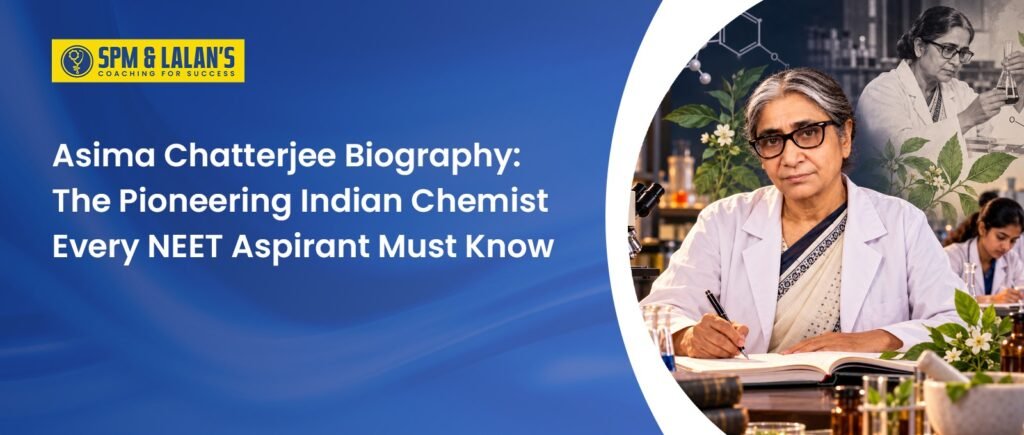
The Asima Chatterjee biography is an inspiring story of scientific curiosity, perseverance, and medical research. An eminent Indian organic chemist, she made important contributions to natural product chemistry and phytomedicine. Her research on medicinal plants led to the development of anti-epileptic and anti-malarial medicines.
Who Was Asima Chatterjee?

Asima Chatterjee was born on 23 September 1917 in Calcutta, now Kolkata. She became one of India’s leading organic chemists and was particularly known for studying biologically active compounds found in plants.
Some key facts include:
- Full name: Asima Chatterjee
- Born: 23 September 1917
- Birthplace: Calcutta, British India
- Field: Organic chemistry and phytomedicine
- Main research: Medicinal plants, alkaloids and natural products
- Died: 22 November 2006
- Age at death: 89 years
Her work connected chemistry with medicine and showed how naturally occurring compounds could be studied for therapeutic applications.
How Did Asima Chatterjee Begin Her Education?
The Asima Chatterjee biography reflects her determination to pursue higher education when opportunities for women in science were still limited. She studied chemistry at Scottish Church College in Calcutta and graduated with honours in 1936. She then completed her M.Sc. in Organic Chemistry from the University of Calcutta in 1938.
Her academic journey included:
- Matriculation from Bethune Collegiate School
- Higher studies at Bethune College
- Honours in Chemistry from Scottish Church College in 1936
- M.Sc. in Organic Chemistry from the University of Calcutta in 1938
- D.Sc. from the University of Calcutta in 1944
She became the first woman to receive a Doctorate of Science from an Indian university. During her research, she worked on plant products and synthetic organic chemistry.
How Did She Build Her Scientific Career?
A major part of the Asima Chatterjee biography is her long career in teaching and research. She began her academic career at Lady Brabourne College, where she became the founder-head of its Chemistry Department. Later, she joined the University of Calcutta and continued her research into natural products and medicinal compounds.
Her career included:
- Professor and Head of Chemistry at Lady Brabourne College
- Reader in Chemistry at the University of Calcutta
- Khaira Professor of Chemistry at the University of Calcutta
- Head of the Chemistry Department at Calcutta University
- Researcher in natural product chemistry
- Member of the Rajya Sabha from 1982 to 1990
She also carried out postdoctoral research in the United States, including work at the University of Wisconsin and the California Institute of Technology.
What Were Her Major Contributions to Medical Science?
The Asima Chatterjee biography is especially important for NEET aspirants because her research connected chemistry, biology, and medicine. She investigated compounds from medicinal plants, particularly alkaloids and coumarins. Her research contributed to the development of medicines for several conditions.
Her major contributions included:
- Development of the anti-epileptic drug Ayush-56 from Marsilea minuta
- Research into anti-malarial compounds from Indian medicinal plants
- Extensive studies of alkaloids and their chemical structures
- Research related to anti-cancer compounds and chemotherapy
- Investigation of naturally occurring medicinal compounds
- Studies of plant-derived chemicals and their biological activity
The Shanti Swarup Bhatnagar Prize citation notes that she investigated numerous Indian plant species and isolated several new alkaloids and other compounds.
Why Is Her Research Important for NEET Aspirants?
The Asima Chatterjee biography connects directly with several areas students encounter in biology and chemistry. Her research demonstrates how scientific knowledge can move from plants and chemical compounds to potential medicines.
NEET aspirants can learn about:
- Natural products: Chemicals obtained from plants can have medicinal properties.
- Alkaloids: These nitrogen-containing compounds occur naturally in many plants.
- Phytomedicine: Plant-derived substances can be investigated for therapeutic use.
- Organic chemistry: Understanding molecular structures is essential for studying biological activity.
- Drug development: Scientific research can transform naturally occurring compounds into useful medicines.
Her career is therefore a good example of how different branches of science work together in medical research.
Download CBSE & CEBA PYQs here
NEET & JEE Mock Test
Which Awards Did Asima Chatterjee Receive?
The Asima Chatterjee biography includes several prestigious honours recognising her scientific achievements.
Her major recognitions included:
- Shanti Swarup Bhatnagar Prize in Chemical Sciences – 1961
- Padma Bhushan – 1975
- Fellowship of the Indian National Science Academy
- C. V. Raman Award
- P. C. Ray Award
- Several honorary D.Sc. degrees
She was the first woman recipient of the Shanti Swarup Bhatnagar Prize in Chemical Sciences. In 1975, she also became the first woman scientist elected as General President of the Indian Science Congress Association.
What Can Students Learn From Her Life?
The Asima Chatterjee biography offers valuable lessons for students preparing for competitive medical and science examinations.
- Stay curious: Her interest in medicinal plants shaped her scientific career.
- Build strong basics: Chemistry became the foundation of her research.
- Keep researching: She spent decades studying natural products.
- Work through challenges: Limited research resources did not stop her scientific work.
- Connect subjects: Her research brought together chemistry, biology, medicine, and botany.
Students can also find inspiration in the lives of other great Indian scientists. Explore the Dr. APJ Abdul Kalam biography to discover valuable lessons about education, scientific curiosity, and perseverance.
Why Is Asima Chatterjee Remembered Today?
The Asima Chatterjee biography represents the achievements of an Indian scientist who used chemistry to explore new possibilities in medicine. Her work on medicinal plants, alkaloids, anti-epileptic medicines, anti-malarial research, and natural products created a lasting scientific legacy. For NEET aspirants, her story is a reminder that medical science is not limited to clinical practice. Research in chemistry, biology, pharmacology, and plant science can also play a major role in improving human health. Inspired by Asima Chatterjee’s contributions to medical science? Students aspiring to pursue careers in medicine can explore SPM & LALAN’S, a top NEET coaching institute in Assam, for structured preparation, expert guidance, and concept-focused learning.
Conclusion
The Asima Chatterjee biography is a story of scientific excellence and determination. As one of India’s pioneering women chemists, she transformed the study of natural products into valuable medical research. Her achievements continue to inspire students who want to explore chemistry, medicine, biotechnology, and scientific research.
For students preparing for medical and engineering entrance examinations, SPM & LALAN’S Coaching in Guwahati offers preparation resources and guidance for NEET and JEE aspirants.
Students and parents interested in visiting the institute can find SPM & LALAN’S Coaching on Google Maps for location details and directions.
Frequently Asked Questions
Who was Asima Chatterjee?
Asima Chatterjee was an Indian organic chemist known for her research in natural products, medicinal plants, alkaloids, and phytomedicine.
What was Asima Chatterjee famous for?
She was known for developing the anti-epileptic drug Ayush-56 and conducting important research on anti-malarial and anti-cancer compounds.
Which award did Asima Chatterjee receive?
She received the Shanti Swarup Bhatnagar Prize in Chemical Sciences in 1961 and the Padma Bhushan in 1975.

This article is written by the SPM & LALAN’S Content Team, a group of skilled writers, researchers, and content strategists passionate about creating accurate, reliable, and student-friendly educational content. Every article is thoroughly researched, fact-checked, and updated to ensure readers receive trustworthy and relevant information. The goal is to help students make informed academic decisions through clear, well-researched, and easy-to-understand content.