

Choosing a career after JEE is about more than getting a seat at a particular institute. Students should consider the branch, curriculum, skills, internships, higher-study options, and the type of work they want to pursue. There are also several careers after JEE Main & Advanced beyond the usual IIT or NIT core-branch choices. Computer science, AI, data science, robotics, core engineering, research, and integrated programs can all lead to different professional paths.
What are the main careers after JEE Main and Advanced?
JEE-qualified students can explore several academic and career routes depending on their rank, interests, and admission eligibility.
Some common options include
- Computer Science and Engineering
- Artificial Intelligence and Machine Learning
- Data Science
- Electronics and Communication Engineering
- Mechanical Engineering
- Electrical Engineering
- Civil Engineering
- Chemical Engineering
- Robotics and Automation
- Research and higher education
- Integrated and dual-degree programs
Therefore, students should look beyond the institute name and understand what each program actually offers.
Is computer science and AI the only route to technology careers?
No. Computer science and AI are popular routes into the technology sector, but they are not the only options.
- Computer science can lead to software development, cybersecurity, cloud computing, artificial intelligence, machine learning, and other technology roles.
- AI-focused programs can provide additional exposure to machine learning, intelligent systems, and related computational areas.
- At the same time, students should not automatically treat core engineering branches as less valuable. Mechanical, electrical, civil, chemical, and other branches can lead to careers in manufacturing, energy, infrastructure, technical design, research, and specialized engineering.
- When comparing a preferred branch with a different branch at another institute, check the curriculum, career direction, and opportunities rather than relying only on the institute’s reputation.
Can IIITs and GFTIs offer good alternatives to IITs and NITs?
Yes. Students participating in JoSAA should not limit their preference list to IITs and NITs.
For the 2026 admission cycle, JoSAA manages admissions to 138 institutes, including 23 IITs, IISc Bengaluru, 31 NITs, IIEST Shibpur, 26 IIITs and 56 Other-GFTIs. IIITs can be particularly relevant for students interested in computer science, information technology, and related technology programs. GFTIs cover a broader range of institutes and academic programmes. Before adding any institute to your list, check its program, curriculum, fees, location, placement information, internship opportunities, and admission requirements.
Are dual-degree and integrated programs worth considering?
Students who already have an interest in higher education can consider integrated and dual-degree programs. These programs can combine undergraduate and postgraduate study within one academic pathway. Depending on the institute, they may suit students interested in advanced specialization, research, or a longer academic route.
However, students should understand the program structure before selecting one. Check:
- Total program duration
- Degrees or qualifications awarded
- Branch and specialization
- Academic structure
- Exit options, if available
- Higher-study opportunities
A dual-degree program should be selected because it matches your academic plans, not simply because it offers two qualifications.
What are the emerging careers after JEE Main & Advanced?
Technology continues to create opportunities in fields such as data science, artificial intelligence, robotics, automation, and computational engineering.
- Data science combines mathematics, statistics, programming, and domain knowledge. Robotics brings together mechanical engineering, electronics, control systems, and computing.
- AI combines programming with mathematical and statistical concepts. Students also do not always need a degree with the exact name of an emerging field.
- A strong foundation in computer science, mathematics, electronics, or another related engineering discipline can help students move into specialized technology areas through projects, internships, certifications, or higher studies.
This makes emerging technology fields another important part of careers after JEE Main & Advanced.
What can students do with core engineering branches?
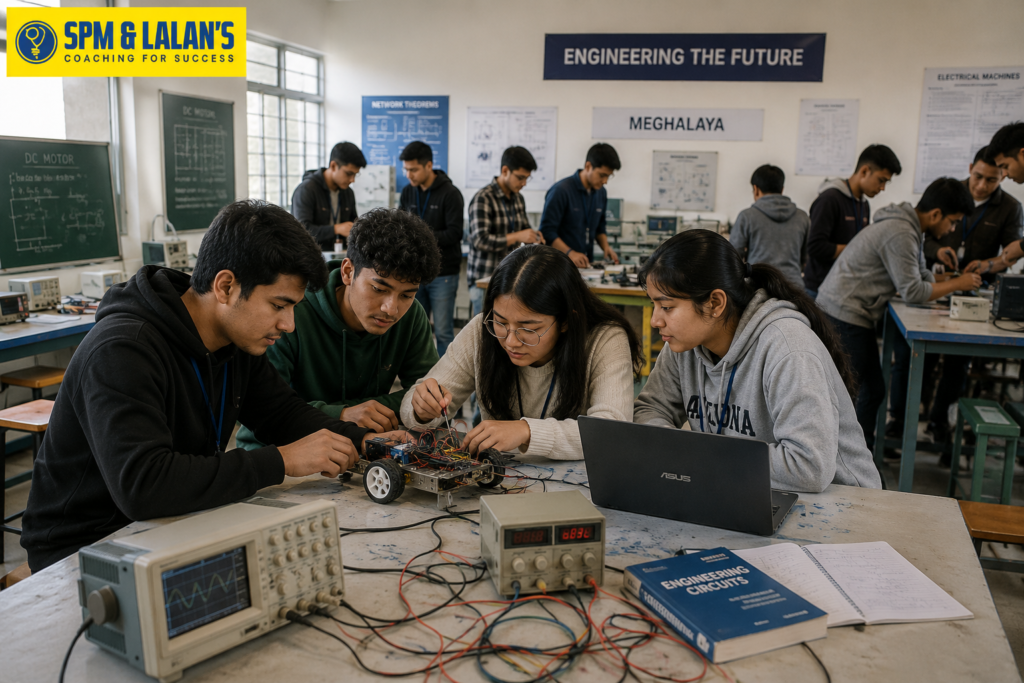
Core engineering can provide several career paths outside conventional software roles.
For example:
- Mechanical Engineering: Manufacturing, automotive, design, production, thermal engineering and robotics
- Electrical Engineering: Power systems, electronics, energy, control systems and electrical design
- Civil Engineering: Construction, infrastructure, transportation, structural engineering and urban development
- Chemical Engineering: Process industries, pharmaceuticals, energy, manufacturing and materials
- Electronics and Communication: Embedded systems, telecommunications, semiconductor-related work, and electronics
The actual career path depends on the student’s skills, internships, projects, academic performance, and further specialisation.
How should you choose a course after JEE Main?
There is no single branch that suits every student. Your interests, academic strengths, and long-term plans should influence your decision.
Before finalizing your choices, compare:
- Course curriculum
- Institute and academic environment
- Previous closing ranks
- Placement information
- Internship opportunities
- Fees
- Location
- Higher-study options
- Industry exposure
- Your interest in the subject
For example, a student who enjoys programming may prefer a computing-related program. Another student who enjoys machines, circuits, or infrastructure may prefer a core engineering branch.
What factors matter beyond the college name?
The college name can influence opportunities, but it should not be the only factor in your decision.
Consider the following before choosing a program:
- Branch: Check whether you genuinely want to study the subject.
- Curriculum: Look at the subjects, laboratories, and specialisations.
- Internships: Check the institute’s internship ecosystem and industry exposure.
- Placements: Review recent official placement information where available.
- Fees: Compare tuition and other academic expenses.
- Location: Consider travel, accommodation, and living costs.
- Higher studies: Check opportunities for research, postgraduate study, and specialization.
- Personal interest: Think about the kind of work you want to explore after graduation.
This approach can help students identify suitable careers after JEE Main & Advanced instead of choosing a program based only on its label.
What is a practical way to decide your career after JEE?
A simple approach is to work through these steps:
Step 1: Identify the subjects and fields you enjoy.
Students preparing for the next cycle can also check the JEE Main 2027 exam dates before planning their application and counselling timeline.
Step 2: Shortlist branches related to those interests.
If you are still preparing for the exam, use a JEE Main 2027 preparation strategy to work toward the rank needed for your shortlisted courses.
Step 3: Check institutes offering those branches.
Step 4: Compare previous JoSAA closing ranks.
Step 5: Review fees, internships, placements, and location.
Step 6: Create a preference list with realistic alternatives.
Step 7: Check the latest JoSAA eligibility and program restrictions before submitting choices.
Previous closing ranks are useful references, but they do not guarantee future admission. Seat availability, candidate preferences, and counselling conditions can change between years.
NEET & JEE Mock Test
Download CBSE & CEBA PYQs here
Conclusion
Careers after JEE Main & Advanced extend beyond getting a conventional branch at an IIT or NIT. Students can explore computer science, AI, core engineering, IIITs, GFTIs, integrated programs, research, and emerging technology fields. The right choice depends on the course you want to study, the skills you want to develop, and the opportunities available at the institute. Therefore, use official JoSAA data, compare program details, and build a preference list that includes realistic alternatives.
Students in Guwahati who are preparing for Main and Advanced can explore JEE coaching in Guwahati while planning their course options.
Learn more about SPM & Lalan’s coaching centres. Planning to visit? Find SPM & Lalan’s on Google Maps.
FAQs
Can I enter software or IT after studying a core engineering branch?
Yes, students from branches such as mechanical, civil, or Chemical Engineering can develop programming and technology skills through projects, internships, courses, and higher studies. However, specific jobs may have their own eligibility requirements.
Is doing an MBA after engineering a possible career option?
Yes, engineering graduates can pursue an MBA after completing their undergraduate degree. An MBA can open pathways into areas such as management, finance, marketing, consulting, and operations, depending on the institution, specialisation and career goals.
What are the research options after JEE?
Students interested in research can pursue engineering, science or integrated programmes and later continue with postgraduate study or research. Institutes offering science and technology programs can provide pathways into areas such as mathematics, physics, computing and engineering research.

This article is written by the SPM & LALAN’S Content Team, a group of skilled writers, researchers, and content strategists passionate about creating accurate, reliable, and student-friendly educational content. Every article is thoroughly researched, fact-checked, and updated to ensure readers receive trustworthy and relevant information. The goal is to help students make informed academic decisions through clear, well-researched, and easy-to-understand content.