

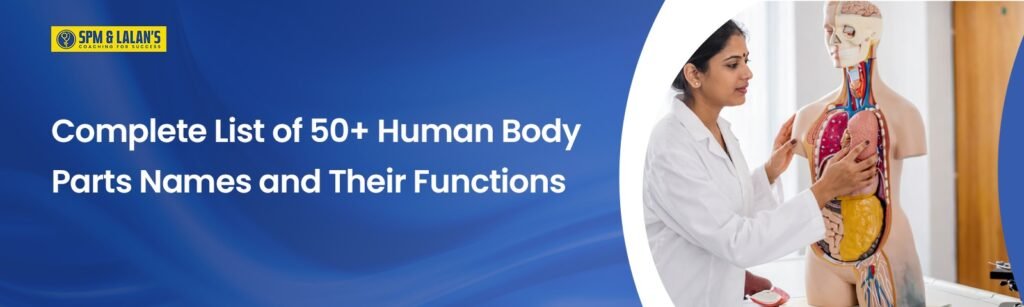
An A-Z Guide for Students, Human Biology for Students
Imagine a machine so sophisticated that it can think, feel, and heal itself. This machine can perform millions of operations every single second. That machine is the human body.
With over 78 organs and trillions of cells, the human body works in precise harmony. It is the most complex structure known to science. Understanding human body parts and their functions is an essential first step. This knowledge is critical for grasping the basics of human anatomy, whether you are a student, a curious learner, or preparing for a medical or biology exam through platforms like guwahati coaching institute
In this article, we will break down over 50 key human body parts. We start from the outermost layer of skin and go to the deepest internal organs. We will explain what each part does and why it matters. This guide is especially helpful for students preparing for competitive exams like NEET, where understanding human anatomy is essential. If you are looking for structured preparation, you can explore NEET coaching in Guwahati for expert guidance.
External Human Body Parts and Their Functions
External human body parts are the structures visible on the outside of the body. They serve as the interface between our internal biology and the outside world, playing roles in sensation, protection, communication, and movement.
A-Z Table of External Human Body Parts
| Body Part | Location / Description | Primary Function |
| Arms | Upper limbs | Lifting, carrying and manipulating objects |
| Ears | Sides of the head | Hearing and balance |
| Eyes | Front of the face | Vision and light detection |
| Fingers | Ends of the hands | Fine motor skills, touch, grip |
| Feet | Base of the lower limbs | Support body weight, balance, walking |
| Hair | Scalp and body surface | Insulation, sensory detection |
| Hands | End of the arms | Grasping, writing, crafting |
| Head | Top of the body | Houses the brain, sensory organs |
| Knee | Joint in the lower limb | Enables bending and straightening of legs |
| Lips | Opening of the mouth | Speech, eating and facial expression |
| Mouth | Lower part of the face | Eating, breathing, speaking |
| Nails | Tips of fingers and toes | Protection of fingertips, gripping |
| Neck | Connects head to torso | Supports the head, houses vessels and nerves |
| Nose | Center of the face | Breathing, filtering air and sense of smell |
| Shoulders | Top of the torso | Connects arms, wide range of motion |
| Skin | Entire body surface | Protection, temperature regulation, sensation |
| Toes | Ends of the feet | Balance and push-off during walking |
| Tongue | Inside the mouth | Taste, chewing, speaking |
Note: The skin is the largest organ in the human body, covering an average surface area of 1.5 to 2.0 square meters in adults. It belongs to both the external body and the integumentary system.
Internal Organs and Their Functions
While external parts are visible, the true powerhouses of the body are the internal organs working silently beneath the surface. Understanding the functions of internal organs is a cornerstone of human biology for students at every level.
Core Internal Organs (A-Z)
- Adrenal Glands: Sit on top of each kidney; produce adrenaline and cortisol to manage stress and metabolism.
- Appendix: Small pouch attached to the large intestine; may play a minor role in gut immunity.
- Bladder: Muscular sac in the pelvis; stores urine until it is expelled from the body.
- Brain: The command center of the body; controls thought, memory, emotion, movement, and all body systems.
- Colon (Large Intestine): Absorbs water from undigested food and forms solid waste (stool) for elimination.
- Diaphragm: Dome-shaped muscle below the lungs; its contraction drives breathing.
- Esophagus: A muscular tube that transports food from the mouth to the stomach via coordinated wave-like contractions.
- Gallbladder: Stores bile produced by the liver and releases it into the small intestine to aid fat digestion.
- Heart: Four-chambered muscular pump that circulates blood throughout the entire body, delivering oxygen and nutrients.
- Kidneys (×2): Filter approximately 200 liters of blood daily, removing waste products and excess fluid as urine.
- Liver: The body’s chemical factory; performs over 500 functions, including detoxification, protein synthesis, and bile production.
- Lungs (×2): Exchange oxygen and carbon dioxide between the air and the bloodstream, enabling cellular respiration.
- Lymph Nodes: Small glands that filter lymph fluid and are central to immune response and infection defense.
- Ovaries / Testes: Reproductive organs that produce eggs or sperm and sex hormones (estrogen/testosterone).
- Pancreas: Produces insulin to regulate blood sugar and digestive enzymes to break down carbohydrates, fats, and proteins.
- Small Intestine: The primary site of nutrient absorption; approximately 6-7 meters long in adults.
- Spinal Cord: A bundle of nerves extending from the brain stem; it relays signals between the brain and the rest of the body.
- Spleen: Filters blood, recycles old red blood cells, and helps fight infections.
- Stomach: Churns food with acid and enzymes, beginning the process of protein digestion.
- Thyroid Gland: Butterfly-shaped gland in the neck; regulates metabolism, growth, and energy levels via thyroid hormones.
- Uterus: A muscular female organ that nourishes and houses a developing fetus during pregnancy.
Understanding the functions of internal organs is also a key part of the NEET curriculum. You can refer to the NEET Biology syllabus 2026 to see how these topics are structured for exams.
Human Body Parts Categorized by System
Grouping human body parts by system is one of the most effective ways to understand human anatomy basics. Each system is a coordinated network of organs and tissues working toward a shared biological goal.
1. Skeletal System Overview
The skeletal system consists of 206 bones in the adult human body, along with cartilage, ligaments, and joints. A solid skeletal system overview reveals its key roles:
- Provides structural support and shape to the body
- Protects vital organs (skull protects the brain; ribcage shields the heart and lungs)
- Works with muscles to enable movement
- Produces red and white blood cells in the bone marrow
- Stores essential minerals such as calcium and phosphorus
2. Muscular System
Over 600 muscles make up this system, enabling every movement from blinking to running. Muscles also maintain posture, generate body heat, and support circulation (the heart itself is a specialized muscle).
3. Nervous System
The brain, spinal cord, and an estimated 86 billion neurons form this system. It controls voluntary actions (walking, speaking) and involuntary processes (heartbeat, digestion) and processes all sensory information from the external environment.
4. Circulatory System
The heart, blood vessels (arteries, veins, capillaries), and blood itself form this system. It transports oxygen, nutrients, hormones, and waste products to and from every cell in the body, completing approximately 2,000 gallons of circulation daily.
5. Respiratory System
The nose, trachea, bronchi, and lungs work together to bring oxygen into the body and expel carbon dioxide. This system is critical to cellular energy production and is directly linked to cardiovascular health.
6. Digestive System
From the mouth to the rectum, the digestive system breaks food into absorbable nutrients. Key players include the stomach, small intestine, large intestine, liver, pancreas, and gallbladder, spanning roughly 9 meters in total length.
7. Endocrine System
A network of glands, including the pituitary, thyroid, adrenal glands, and pancreas, that secretes hormones directly into the bloodstream. These chemical messengers regulate metabolism, growth, mood, reproduction, and stress responses.
8. Immune System
The body’s defense network comprises white blood cells, the spleen, thymus, lymph nodes, and bone marrow. It identifies and destroys pathogens (bacteria, viruses, fungi) and remembers past threats for faster future responses.
9. Integumentary System
The skin, hair, and nails make up this protective outer layer. As a human body parts name and their functions topic in anatomy, the skin stands out as the largest organ and the body’s first line of defense against infection, UV radiation, and physical injury.
10. Reproductive System
- In males: testes, epididymis, and penis.
- In females: ovaries, fallopian tubes, uterus, and vagina. Together, these structures enable the production of reproductive cells and the development of new life.
Conclusion
The human body is an intricate system. From the protective barrier of the skin to the rhythmic beating of the heart, every structure has a precise purpose. This guide covers the names of human body parts and their functions. It provides a strong foundation in human anatomy basics. This makes it ideal for students, educators, and anyone curious about how the human body works.
You can study the skeletal system. You can also explore the functions of internal organs. If you are learning about external human body parts for the first time, remember this key takeaway: every part of your body, no matter how small, contributes to the whole. The human body is not just biology; it is a masterpiece of natural engineering.
If you are preparing for competitive exams, mastering topics like human anatomy is essential. You can also check this guide on how to prepare for Biology for NEET to strengthen your overall preparation strategy.
Frequently Asked Questions (FAQ)
1. What is the largest organ in the human body?
The skin is the largest organ in the human body. It covers the entire external surface of the body and weighs approximately 3.5 to 4 kg in an adult, spanning a total surface area of around 1.5 to 2.0 square meters. Its primary roles include protection from pathogens, regulation of body temperature, and providing the sense of touch.
2. How many bones are in the adult human skeletal system?
The adult human body has precisely 206 bones. Interestingly, babies are born with approximately 270 to 300 bones, many of which fuse together during childhood and adolescence. The femur (thigh bone) is the longest and strongest bone, while the stapes inside the ear is the smallest.
3. What is the main function of the respiratory system?
The primary function of the respiratory system is gas exchange, bringing oxygen from the air into the bloodstream and removing carbon dioxide waste from the body. This process takes place in the lungs, specifically in tiny air sacs called alveoli. Oxygen is then carried by red blood cells to every cell in the body to fuel energy production (cellular respiration).
4. Which organ is responsible for pumping blood throughout the body?
The heart is the organ responsible for pumping blood throughout the body. This fist-sized, four-chambered muscular organ beats approximately 100,000 times per day, pumping around 5 liters of blood per minute at rest. It is the engine of the circulatory system, ensuring that oxygen, nutrients, and hormones are delivered to every cell while waste products are carried away.
This article is written by the SPM & LALAN’S Content Team, a group of skilled writers, researchers, and content strategists passionate about creating accurate, reliable, and student-friendly educational content. Every article is thoroughly researched, fact-checked, and updated to ensure readers receive trustworthy and relevant information. The goal is to help students make informed academic decisions through clear, well-researched, and easy-to-understand content.