
Have you ever wondered about how our body moves, how it performs all the necessary tasks? The answer to this is the human nervous system. It is one of the most complex yet important systems of our body. The main function of this system is to control body movements, thoughts, emotions, memory, sensation, and coordination between different organs.
If you are finding it tough to understand the multiple aspects of the human nervous system. Don’t worry, in this article, we are going to discuss this topic in detail.
Students preparing for NEET and board exams can explore more study resources and expert guidance at SPM and Lalans
Understanding the nervous system is very important for NEET, board exams, and other competitive exams. Students looking for best NEET coaching in Guwahati can also strengthen their Biology preparation with expert guidance.
What is the Human Nervous System?
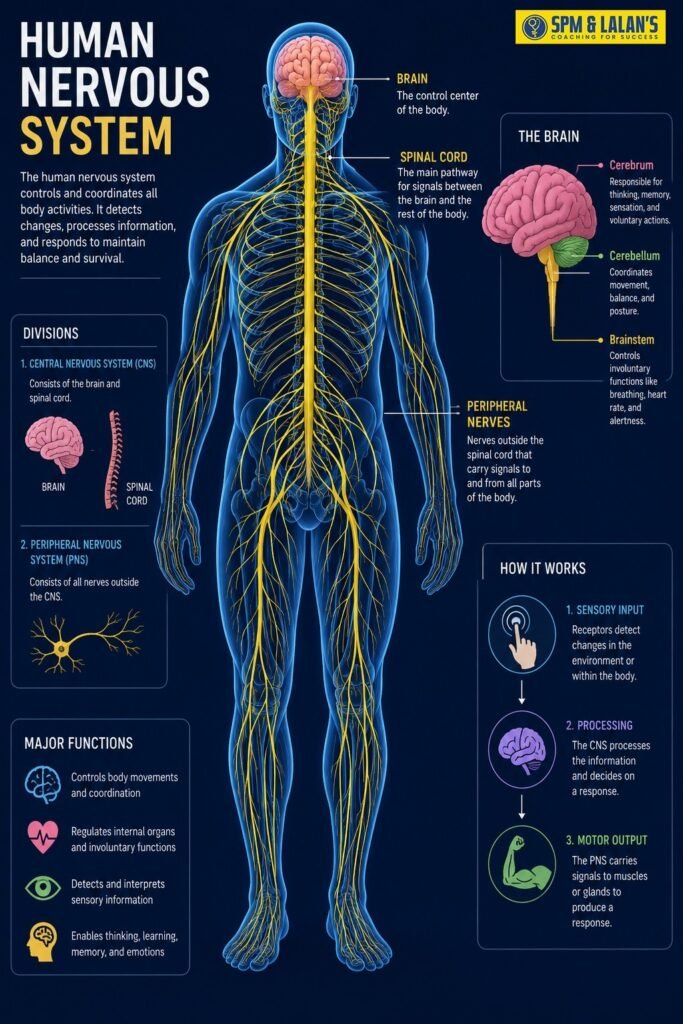
The most important and obvious question coming to your mind would be what the human nervous system actually is. In simple terms The human nervous system is a complex network of cells called neurons that transmit signals throughout the body. The primary roles of this system are-
- It helps in controlling the activities of the body
- It maintains coordination and balance between different parts of the body
- It helps the process of learning and thinking
- It helps in the memory of an individual
- It receives and responds to stimuli
- It regulates voluntary and involuntary actions
What are the parts of the Human Nervous System?
Hey, do you know that this system can broadly be classified into two parts-
- Central Nervous System (CNS)
- Peripheral Nervous System (PNS)
Now let us discuss these two nervous systems in details
Central Nervous System (CNS)
As the name suggest it is central to our nervous system. So, it consists of the most important parts of the nervous system. In this section, we will discuss the CNS in detail. It can be divided into two parts
- Brain
- Spinal Cord
Brain
Our brain is the main control center of the body. It controls thinking, memory, emotions, movement, balance, and body coordination. The brain receives signals from different parts of the body. It processes information and sends responses. Some of the vital activities regulated by the brain are breathing, heartbeat, temperature control, and decision-making.
The human brain can be divided into three major parts. These are-
- Forebrain-
It includes the Cerebrum, Thalamus, and Hypothalamus. The cerebrum controls- Intelligence, thinking, memory, emotion, etc. It is also the largest part of the brain. The main function of the hypothalamus is to regulate body temperature, hormones, hunger, thirst, sleep, etc.
- Midbrain-
The midbrain acts as a bridge between the forebrain and hindbrain. Its main function is to control audiovisual reflexes in the human body
- Hindbrain-
The hindbrain is constituted of the Cerebellum, Cons, and Medulla Oblongata. The cerebellum maintains balance, posture, and also coordination of muscles. The primary role of the medulla oblongata is to control important involuntary activities such as- Heart beat, breathing, and blood pressure.
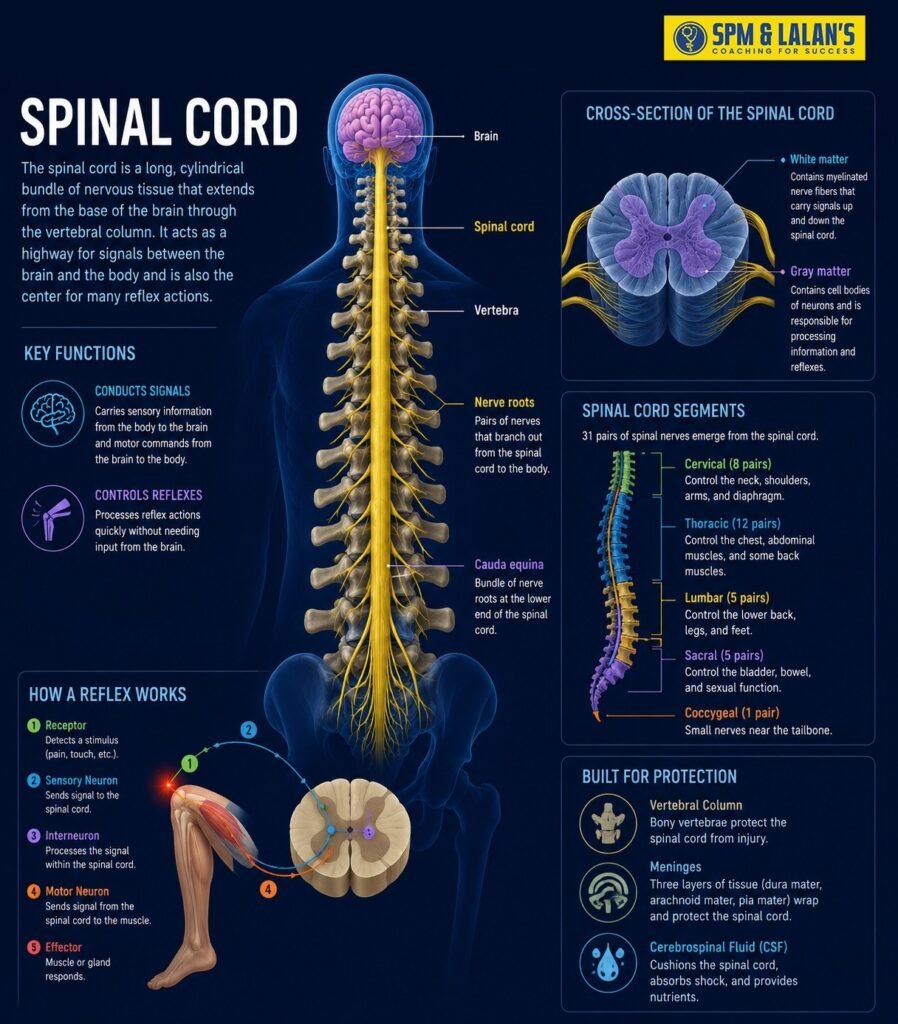
Spinal Cord
Do you know that the spinal cord plays the same role as a communication pathway between the brain and the rest of the body? It is involved in carrying sensory information from the body organs to the brain
It is the spinal cord only that controls all our reflexes. To protect the spinal cord from injury, it is covered by the vertebral column.
Peripheral Nervous System (PNS)
We have studied the Brain and spinal cord. But do you know what connects the brain and spinal cord with the rest of the body? The answer is the Peripheral Nervous System. It can also be divided into two parts-
- Somatic Nervous System
- Automatic Nervous System
Somatic Nervous System
Have you ever wondered what controls walking or speaking? It is the somatic nervous system that deals with these voluntary activities. These are the activities that we perform consciously. Some of the examples are- Walking, writing, speaking, and playing sports.
Automatic Nervous System
Have you ever thought about what controls our breathing and heartbeat? The autonomic nervous system controls all the involuntary activities of the body. The involuntary activities occur automatically without any conscious effort. The involuntary functions include heartbeat, breathing, digestion, and gland secretion.
It is central to maintaining the body’s proper functioning. The autonomic nervous system can be further divided into two parts. These are-
The sympathetic nervous system-
The sympathetic nervous system enables the body to fight in stressful or emergencies. It is also known as the “fight or flight” system.
Parasympathetic nervous system-
Have you ever wondered wsat help us cool down in stressful situations? The parasympathetic nervous system helps the body relax after stress. This system is known as the “rest and digest” system.
| Feature | CNS | PNS |
| Full form | Central Nervous System | Peripheral Nervous System |
| Components | Brains, Spinal cord | Nerves |
| Functions | Control center | Connects the CNS to the body |
| Protection | Skull or vertebral column | Minimum protection |
What is a neuron?
Have you ever thought what carries messages throughout our body? It is the Neuron. A neuron is the basic structural and functional unit of the nervous system. It is an important nerve cell. It transmits electrical and chemical signals between the brain, spinal cord, muscles, glands, and sense organs. It form a vast communication network which helps the body respond to internal and external changes quickly and effectively.
What is the structure of a neuron?
Have you ever wondered what the structure of a neuron would look like? The neuron mainly consists of three parts-
- The cell body
The cell body, also called the cyton, contains the nucleus, cytoplasm, and other organelles. It controls the metabolic and functional activities of the neuron. It also acts as the main control center of the neuron. It helps maintain the overall function of the nerve cell.
- Dendrites
Dendrites are short and branched structures. It receives signals from other neurons and carries impulses toward the cell body. They also help in increasing the surface area of the neuron, which helps it to receive signals from multiple nerve cells
- Axon
The axon is a long, fiber-like extension that carries nerve impulses away from the cell body to another neuron, muscle, or gland. It also provides rapid transmission of signals over long distances within the body.
The Neurons can also be classified into three types based on their performance. These are :
- Sensory neurons
Sensory neurons carry impulses from receptors or sense organs to the central nervous system and are also called afferent neurons. They help the body detect stimuli such as heat, pain, touch, light, and sound from the surroundings.
- Motor neurons
Motor neurons carry impulses from the central nervous system to muscles or glands and are known as efferent neurons. They help the body perform actions by stimulating muscles and controlling gland activities.
- Interneurons
Interneurons connect sensory and motor neurons and are mainly found in the brain and spinal cord. They help in processing information and coordinating responses within the central nervous system.
What is Reflex Arch?
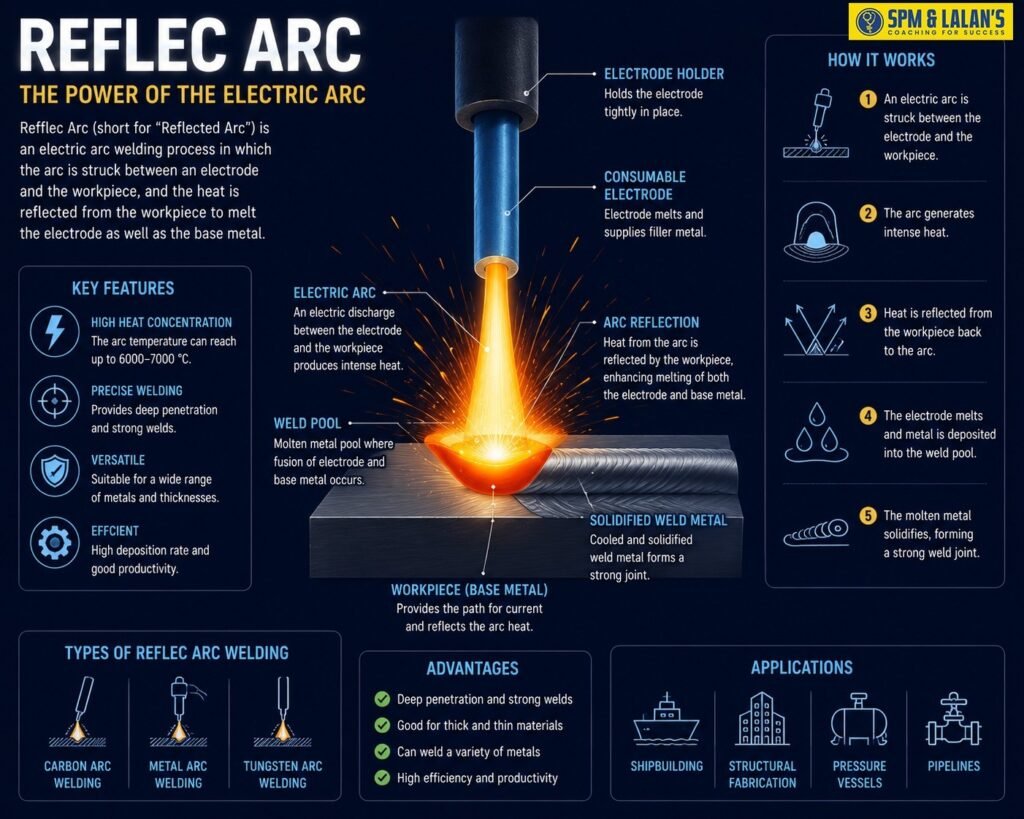
Have you ever imagined how our body manages to reflect instantaniously at any situation? Isn’t it fascinating? A reflex arc is the pathway followed by nerves during a reflex action. It helps the body respond quickly and automatically.
It helps to prevent us from harmful stimuli. It doesn’t wait for instructions from the brain. Reflex actions are fast and protective responses that help us prevent injuries. The reflex arc mainly consists of five components. These are-
- Receptor
When a stimulus such as heat, pain, or sharp touch is detected. The receptor automatically gets activated and sends signals through the sensory neuron to the spinal cord
- Sensory neuron
Sensory neurons help the body detect changes in the surroundings and send signals from sense organs to the brain and spinal cord. They play an important role in helping us feel touch, pain, heat, light, sound, and other sensations quickly
- Interneuron
An interneuron processes the information and immediately passes the signal to the motor neuron. It acts as a connecting link between sensory and motor neurons inside the spinal cord.
- Motor neuron
The motor neuron then carries the response signal to the effector organ, usually a muscle or gland, which reacts instantly
- Effector organ.
The effector organ is the body part that responds to nerve impulses during a reflex action. It is usually a muscle or gland that performs the required action immediately.
Conclusion
One of the most important communication networks in our body is the nervous system. Its primary functions are to control movements, thinking, memory, breathing, reflexes, and coordination between organs. The CNS and PNS work together to maintain proper body functions.
The neurons transmit signals quickly throughout the body. Reflex arcs help the body respond instantly to harmful situations. Understanding the nervous system is very important for NEET, board exams, and other competitive exams.
Students can also practice chapter-wise questions and improve exam performance through these
If you want to score high in Biology, check out these effective tips to prepare Biology for NEET and improve your conceptual understanding.
Students preparing for exams can also follow this proven 60-day NEET Biology strategy to revise important chapters effectively.
Frequently Asked Questions
1. What are the main parts of the human nervous system?
It is mainly divided into two parts: the Central Nervous System (CNS) and the Peripheral Nervous System (PNS). The CNS includes the brain and spinal cord. The PNS consists of nerves that connect the CNS to different body parts.
2. What is the function of a neuron?
The neuron is the basic structural and functional unit of the nervous system. Its main function is to transmit electrical and chemical signals. It functions between the brain, spinal cord, muscles, glands, and sense organs.
3. Why is the brain important in the human nervous system?
The brain is the most important part of this system. It controls how we think, what we think. It controls our memory, emotions, body movements, breathing, and heartbeat, which are integral to our survival.
This article is written by the SPM & LALAN’S Content Team, a group of skilled writers, researchers, and content strategists passionate about creating accurate, reliable, and student-friendly educational content. Every article is thoroughly researched, fact-checked, and updated to ensure readers receive trustworthy and relevant information. The goal is to help students make informed academic decisions through clear, well-researched, and easy-to-understand content.