
Once your CBSE Class 12 results are out and college admissions begin, one document that almost every student needs but often scrambles to find at the last minute is the CBSE 12th migration certificate. Many students confuse it with the Transfer Certificate, do not know how to download it, or realise too late that they needed it for a university document verification session. This guide covers everything about the CBSE 12th migration certificate, what it is, why it matters, how to get it, where you need to submit it, and what to do if something goes wrong. Students preparing for entrance exams, college admissions, or competitive tests can also explore our courses for expert guidance, study resources, and admission support.
What Is the CBSE 12th Migration Certificate and Why Does It Matter?
The CBSE 12th migration certificate is an official document issued by the Central Board of Secondary Education. It confirms that a student has completed their Class 12 examination under CBSE and is now eligible to seek admission in a college or university affiliated with a different board or institution. In simple terms, it closes your CBSE chapter and formally transfers your academic jurisdiction to the new institution you are joining.
Without the migration certificate, many central universities, state universities, deemed universities, and colleges outside the CBSE system will not complete your admission process. It is required specifically when you move to an institution that is not affiliated with CBSE. So if you are joining a Delhi University college, a state university in Assam or Maharashtra, or any institution governed by a separate academic body, this certificate is non-negotiable.
How Has the Process Changed in 2026?
Starting from the 2025 examination session, CBSE completely discontinued the issuance of hard copies of the migration certificate. This was aligned with a UGC directive recognising DigiLocker documents as legally valid for all admissions and verification purposes across India. So the CBSE 12th migration certificate is now available only through DigiLocker, and it is entirely digital.
The good news is that the process is free, instant, and accessible directly from your phone or any browser. There are no forms to fill offline, no fees to pay at a school office, and no waiting period. As soon as CBSE releases results and uploads documents to DigiLocker, your migration certificate is ready to download.
How to Download the CBSE 12th Migration Certificate from DigiLocker?
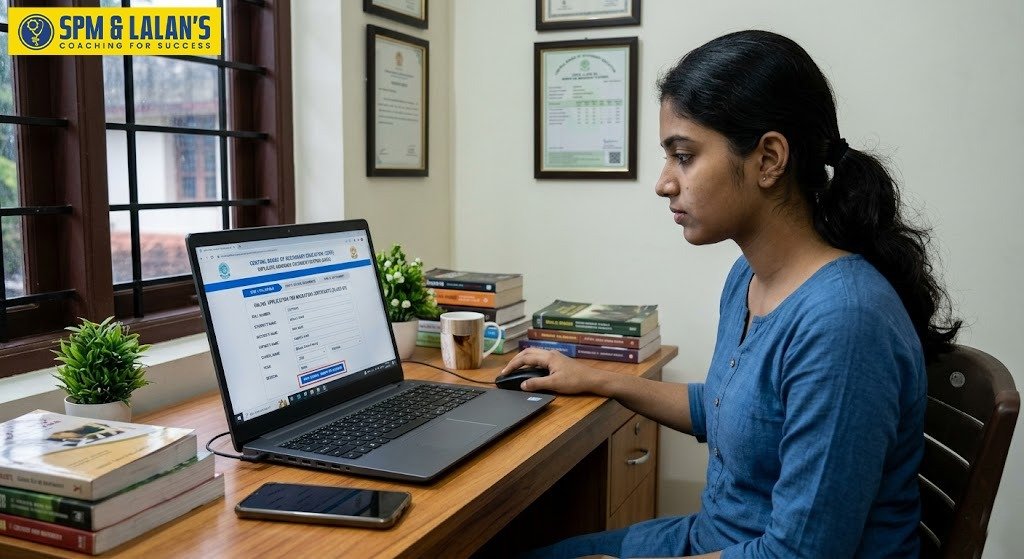
Here is the complete step-by-step process to get your migration certificate through DigiLocker.
Step 1 — Open DigiLocker: Visit digilocker.gov.in in your browser or open the DigiLocker mobile app on your phone.
Step 2 — Sign In: Log in using your Aadhaar-linked mobile number. You will receive an OTP for identity verification. Enter the OTP to proceed.
Step 3 — Enter Security PIN: After OTP verification, the system will prompt you for a security PIN. Enter the last six digits of your CBSE roll number as it appears on your admit card.
Step 4—Navigate to the Education Section: Once inside your DigiLocker dashboard, go to the Education section and select the Central Board of Secondary Education from the list of available issuers.
Step 5 — Select the Migration Certificate: A list of documents will appear, including your marksheet, passing certificate, and migration certificate. Click on Migration Certificate (Class XII).
Step 6 — Download the PDF: The digitally signed migration certificate will be generated and available for download as a PDF. This document carries full legal validity and is accepted by all UGC-recognized colleges and universities across India.
The entire process takes under five minutes, and the document you download is legally equivalent to a physical certificate. You can download it as many times as you need.
What Documents and Credentials Do You Need?
Since the entire process for the CBSE 12th migration certificate is digital, there are no physical documents to submit. However, you need specific credentials ready before you begin the DigiLocker login.
- Aadhaar-linked mobile number: This is the mobile number registered with your Aadhaar card and is used for OTP verification during DigiLocker login.
- CBSE Class 12 roll number: This is your roll number from the admit card, and the last six digits are used as your DigiLocker security PIN.
- Date of birth: Required for identity confirmation during access.
- Aadhaar number: Needed for DigiLocker account access. If Aadhaar linking is unavailable, school credentials can be used as an alternative login method.
What Documents Are Available Through DigiLocker for CBSE Students?
Beyond the migration certificate, the CBSE section on DigiLocker gives students access to several other important academic documents.
- Migration Certificate: Needed for college or university admission outside CBSE-affiliated institutions.
- Passing Certificate: Confirms that the student has cleared the Class 12 board examination.
- Marksheet: The official CBSE Class 12 result document with subject-wise marks.
If you are preparing for improvement exams or future entrance tests, practising with CBSE Class 12 Chemistry Sample Papers can help strengthen your conceptual understanding and exam readiness.
- Digital Certificate: A digitally signed version of the academic credential.
- School Leaving Certificate: The formal document from the school confirming departure.
All these documents are digitally signed and carry the same legal authority as their physical counterparts under the UGC framework.
Along with keeping your CBSE documents ready, revise smarter with previous year questions for board and entrance exam preparation.
Where Is the CBSE 12th Migration Certificate Required?
The migration certificate is needed at multiple stages of the higher education admission process. Since universities and colleges require it at different points, keeping the PDF downloaded and accessible saves time at each step.
- Admission counselling: Many state counselling bodies and central university admission portals ask for the migration certificate during the online or offline counselling process.
- Document verification: After provisional admission, universities call students for physical document verification sessions where the migration certificate must be produced either digitally or in print.
- University registration: To complete formal enrollment in a course, the registrar’s office or academic section typically requires the migration certificate as part of the document set.
- Scholarship applications: Several government and institutional scholarship schemes require the migration certificate as proof of Class 12 completion and board transition before processing the application.
Students planning medical or life science courses can also practise with CBSE Class 12 Biology Sample Papers while preparing for admission-related entrance examinations.
Not every institution follows the same sequence, but missing this document at any of these stages can delay or block the admission process until it is submitted.
Preparing for college entrance exams after Class 12? Test your readiness with our free practice platform.
What Is the Difference Between the CBSE Migration Certificate and the Transfer Certificate?
This is one of the most common sources of confusion among Class 12 students. The migration certificate and the Transfer Certificate are two different documents, serve different purposes, and come from different issuing authorities.
| Document | Issued By | When Required | Purpose |
| Transfer Certificate (TC) | Your School | For Class 11 admission or school-level transfers | Confirms you have left the school |
| Migration Certificate | CBSE Board | For college or university admission after Class 12 | Confirms eligibility to join an institution under a different board or body |
Both documents may be required for college admission, but they are not interchangeable. The TC comes from your school and only covers your departure from that institution. The CBSE 12th migration certificate is issued by CBSE itself and specifically authorises your transition into higher education outside the CBSE framework.
What If You Still Need a Hard Copy of the CBSE Migration Certificate?
Since CBSE has moved entirely to digital issuance, the standard route for the CBSE 12th migration certificate is the DigiLocker download. However, students who specifically need a physical copy for institutional requirements can apply through the DADS system, the Duplicate Academic Document System, at the official CBSE portal at cbseit.in/cbse/web/dads/List.aspx. A processing fee and application form submission are involved in this route. Given that the digitally signed DigiLocker document carries full legal validity, very few students should actually need the physical copy route.
What Happens If You Lose Access to Your DigiLocker Account?
Since the CBSE 12th migration certificate is stored permanently on DigiLocker, losing a physical printout is no longer the issue it used to be, you can simply re-download the PDF anytime your account is active. There is no limit on how many times you download it.
If you lose access to your DigiLocker account itself, for example, if your linked mobile number is no longer active, visit the nearest Common Service Centre or contact DigiLocker support directly to recover your account. For students who need a certified duplicate for specific institutional requirements that do not accept the DigiLocker PDF, the DADS portal at CBSE remains the official channel.
Looking for more CBSE updates, sample papers, admission guidance, and competitive exam resources? Visit the SPM & Lalans homepage for the latest study materials and student support resources.
Conclusion
The CBSE 12th migration certificate is a critical document for every student moving from Class 12 to college or university admission in 2026. Since CBSE has completely shifted to digital issuance through DigiLocker, getting the certificate is now faster and more accessible than ever, just open DigiLocker, sign in with your Aadhaar-linked mobile number, enter your CBSE roll number, navigate to CBSE in the Education section, and download the PDF. The digitally signed document carries full legal validity at all UGC-recognized institutions. Keep the downloaded PDF accessible on your phone and a printed copy ready for document verification sessions, so you are never caught unprepared at any stage of the admission process.
Frequently Asked Questions (FAQs)
Is the CBSE DigiLocker migration certificate valid?
Yes, the migration certificate downloaded from DigiLocker is completely valid and legally equivalent to a physical certificate. This was formally established through a UGC directive recognising DigiLocker documents as authentic for all admissions and verification purposes across India. All UGC-recognised colleges and universities accept the digitally signed DigiLocker PDF without requiring a physical copy, which makes the digital route both faster and equally authoritative.
Can I download the CBSE migration certificate PDF multiple times?
Yes, there is no restriction on how many times you download the migration certificate from DigiLocker. Since the document is stored permanently in your DigiLocker account, you can access and download it as many times as needed across the entire admission cycle, for counselling, document verification, university registration, and scholarship applications, without making any additional request or payment.
What is the difference between the CBSE Passing Certificate and the Migration Certificate?
The Passing Certificate and the migration certificate serve different purposes even though both are available on DigiLocker. The Passing Certificate confirms that a student has cleared the Class 12 board examination and is primarily used as proof of exam completion. The Migration Certificate, on the other hand, specifically authorises a student to seek admission in an institution outside the CBSE framework and is required by colleges, universities, and scholarship bodies during the higher education admission process.

This article is written by the SPM & LALAN’S Content Team, a group of skilled writers, researchers, and content strategists passionate about creating accurate, reliable, and student-friendly educational content. Every article is thoroughly researched, fact-checked, and updated to ensure readers receive trustworthy and relevant information. The goal is to help students make informed academic decisions through clear, well-researched, and easy-to-understand content.