
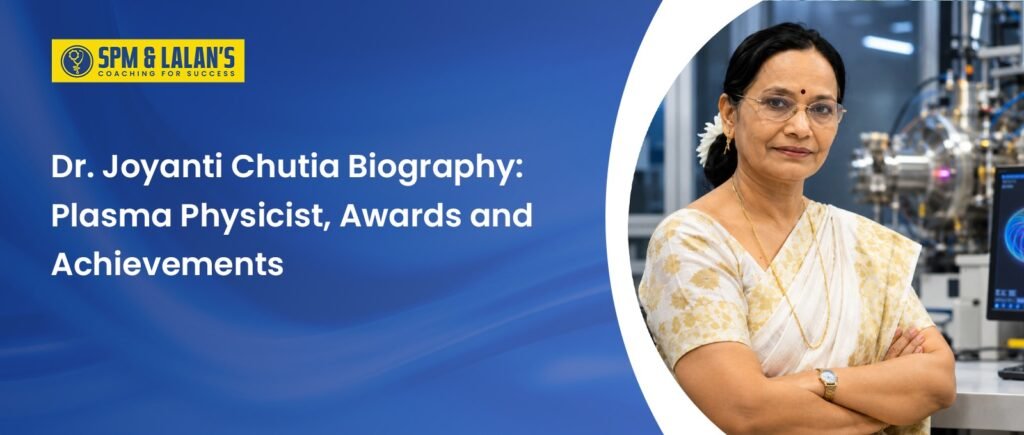
Dr. Joyanti Chutia is an Indian physicist known for her research in plasma physics and her leadership at the Institute of Advanced Study in Science and Technology (IASST), Guwahati. Her scientific career highlights the importance of fundamental research, innovation, and scientific institution-building in Northeast India. As a researcher and former IASST Director, she contributed to plasma science and mentored researchers pursuing advanced scientific studies.
This article explores Dr. Joyanti Chutia’s achievements, educational background, research interests, major awards, and contributions to science. It also examines her role in strengthening scientific research in India.
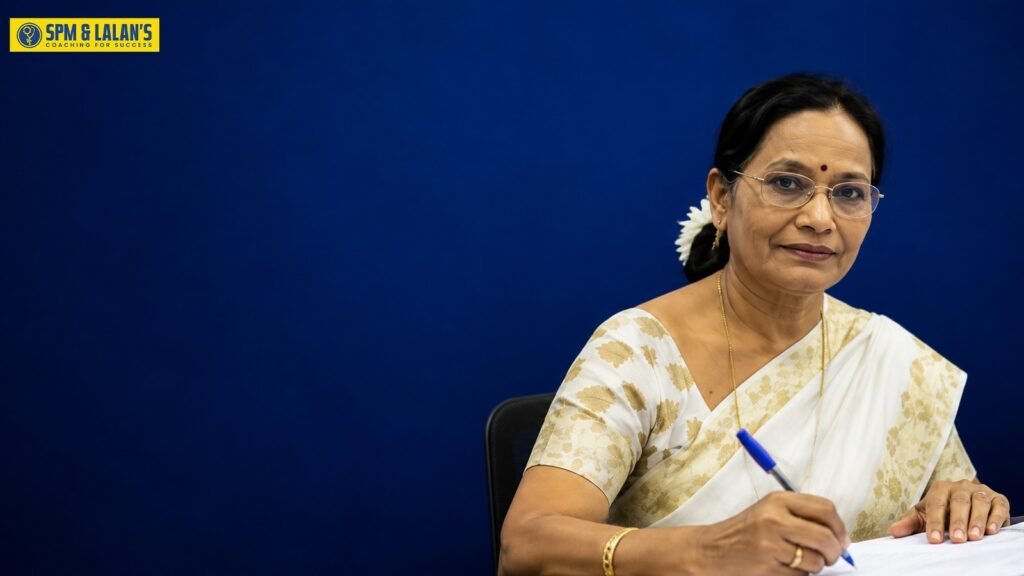
Who Is Dr. Joyanti Chutia?
Dr. Joyanti Chutia is a physicist whose research interests include plasma physics, nonlinear phenomena, and applied plasma technologies. She served as Director of IASST, a research institute under the Department of Science and Technology, Government of India.
Her career combines scientific investigation with academic leadership. In addition to researching complex physical phenomena, she contributed to the development of scientific research and postgraduate training in Assam.
She is also recognised for her work in promoting scientific knowledge and supporting research in areas connected with plasma science and materials applications.
Early Life and Education of Dr. Joyanti Chutia
She was born on 1 August 1948 in Amguri, in Assam’s Sivasagar district, according to biographical accounts. She grew up in an educational environment that encouraged learning and intellectual curiosity. Her father, Sonaram Chutia, worked as a school headmaster, while her mother, Kunjalata Chutia, was a teacher.
During her school years, she developed a strong interest in mathematics. She later pursued physics at Cotton College in Guwahati, completing her B.Sc. in 1967. She earned her M.Sc. in Physics from Dibrugarh University in 1969.
After completing her master’s degree, she worked in teaching before pursuing advanced research. She obtained her Ph.D. in Solid State Physics from Dibrugarh University in 1981. Her doctoral research examined electrical conduction in thin polymer films.
Her academic journey established the foundation for her later research in plasma physics and materials science.
Scientific Career and Research Journey
She began her research career in solid-state physics. Her early work examined the electrical properties of polymer films, including how electric current passes through thin insulating materials.
After completing her doctorate, she continued her research through a postdoctoral fellowship. She subsequently entered plasma physics, a field that studies the behaviour of ionised gases and their interactions with electric and magnetic fields.
Her professional journey included research work at the Physical Research Laboratory in Ahmedabad and the Institute for Plasma Research in Gandhinagar. She later returned to IASST in Guwahati, where she helped establish its Plasma Physics Laboratory.
In 1988, she undertook research at Japan’s Institute of Space and Astronautical Science. This experience supported her engagement with international scientific research and plasma-related investigations.
Her career demonstrates how researchers can build expertise across connected fields while contributing to India’s scientific institutions.
Readers interested in other prominent scientists associated with Assam can explore the achievements of Dr. Jitendra Nath Goswami, whose contributions to planetary science and India’s space research offer another inspiring scientific journey.
Joyanti Chutia Plasma Physics Contributions
Plasma physics explores the behaviour of matter when a significant proportion of its particles carry electric charges. Scientists study plasma to understand complex physical processes and develop technologies for industrial and scientific applications.
Her research interests cover both fundamental plasma science and applied technologies.
1. Nonlinear Dynamics in Plasmas
One of her major research areas involves nonlinear dynamics in plasmas. These studies examine how plasma systems behave when different forces and interactions produce complex responses.
Her research interests include:
- Plasma waves and instabilities: Investigating wave behaviour and disturbances in plasma systems.
- Plasma sheath phenomena: Studying the boundary region that forms between plasma and a surface.
- Chaotic phenomena: Examining complex and sometimes unpredictable behaviour in plasma systems.
These topics help researchers understand plasma behaviour under different physical conditions.
2. Plasma Processing and Materials Science
She also worked on applications of plasma processing. This approach uses plasma to modify surfaces, deposit materials, or create films with specific properties.
Her documented research interests include:
- Metal oxide deposition and thin-film development.
- Plasma polymerisation for producing functional polymer coatings.
- Proton exchange membranes for fuel-cell applications.
- Nanocomposite solar cells.
- Plasma-processed biomaterials.
- Planar and post-magnetron sputtering using direct-current and radio-frequency sources.
These research areas connect fundamental physics with materials engineering, energy technologies and biomedical applications. However, each application requires separate testing to establish its performance and suitability for practical use.
3. Research on Muga Silk and Biomaterials
Another important area associated with research at IASST involves the development of advanced biomaterials using Assam’s indigenous Muga silk.
Scientific work involving researchers at IASST explored plasma-based processing of silk and the development of silk-based suture materials. Published research has examined the use of modified Muga silk in biomedical applications, including sutures.
This work illustrates how scientific research can connect local biological resources with modern materials science. It also highlights the potential of interdisciplinary collaboration between physicists, materials scientists, and biomedical researchers.
The contribution should be understood in the context of collaborative research rather than attributed to one scientist alone.
Dr. Joyanti Chutia Achievements as Former Director of IASST
She served as Director of the Institute of Advanced Study in Science and Technology (IASST), Guwahati, during two consecutive terms.
Her official tenure records list the following periods:
- 30 September 2005 to 8 March 2009
- 9 March 2009 to 31 July 2012
During this period, IASST came under the Department of Science and Technology, Government of India, in March 2009. Her leadership therefore coincided with an important phase in the institute’s institutional development.
IASST supports advanced scientific research across disciplines, including physical sciences, biological sciences and materials science. Her association with the institute reflects the importance of research leadership in building scientific capacity and encouraging collaboration.
As a woman leading a scientific research institution, she also represents the growing role of women in India’s scientific leadership. Her career offers an important example for students, particularly those from Northeast India who aspire to pursue careers in science and research.
Dr. Joyanti Chutia Awards and Achievements
Over her career, Dr. Joyanti Chutia received several awards and professional recognitions for her scientific work and contributions to research.
Some notable honours include:
| Award or Recognition | Year |
| Durlav Deka Memorial Award | 1998 |
| Basanti Bordoloi Award | 2002 |
| Ghanashyam Goswami Memorial Award for Popular Science Writing | 2004 |
| Sadhani Saurya Award for Plasma Physics Research in Northeast India | 2005 |
| Kamal Kumari National Award | 2005 |
| Women Physicist Award from Mother Teresa Women’s University | 2010 |
| Lifetime Achievement in Scientific Research and Innovation Award, Government of Assam | 2020 |
These awards recognise different aspects of her professional journey, from scientific research and popular science writing to her broader contribution to science and innovation.
Her election as a Fellow of the National Academy of Sciences, India, in 2004 and subsequent fellowship recognition in 2005 further reflect her standing in the scientific community.
The range of these honours highlights the value of sustained research, scientific communication and academic leadership.
Publications and Academic Contributions
Scientific publications provide an important record of a researcher’s work. The official IASST profile lists 145 publications for her, including 88 papers in cited journals. It also records 15 Ph.D. scholars who completed their degrees under her academic guidance.
Her published work covers solid-state physics, plasma waves, instabilities, and materials-related research. These publications contribute to the wider scientific understanding of physical systems and their potential applications.
Her career also demonstrates the importance of international research collaboration. Her research experience in Japan and engagement with other scientific institutions helped connect her work with broader research networks.
Beyond publishing research, scientists contribute by guiding students, sharing scientific knowledge and supporting the development of research institutions. These activities help strengthen the long-term foundations of scientific progress.
Dr. Joyanti Chutia in Contributions to Science in India
Her career connects fundamental physics, applied research, and scientific institution-building. Her work illustrates how scientific investigation can extend from understanding complex plasma behaviour to exploring materials and technology applications.
Her contributions are particularly relevant to the development of science in Assam and Northeast India. By working at IASST and leading the institute, she helped strengthen the region’s presence in India’s research ecosystem.
The importance of scientific leadership and institution-building in India is also reflected in the achievements of Shanti Swarup Bhatnagar, who played a significant role in developing India’s scientific research infrastructure.
Her professional journey offers several lessons for aspiring scientists:
- Build strong academic foundations: Her progression from physics education to doctoral research demonstrates the value of subject knowledge.
- Explore interdisciplinary research: Her work connects plasma physics with materials science and applied technologies.
- Value collaboration: Scientific advances often emerge through teamwork across institutions and disciplines.
- Support future researchers: Mentoring and research training help sustain scientific progress.
- Communicate science effectively: Popular science writing can help make scientific knowledge accessible to wider audiences.
As a woman scientist who led a major research institution, she also provides an example of women’s participation in fields that have historically faced gender barriers.
Conclusion
Dr. Joyanti Chutia’s career reflects a strong commitment to physics research, scientific leadership, and academic development. Her contributions to plasma science, research guidance, and institutional leadership highlight the role of scientific innovation and mentorship in advancing India’s scientific progress.
For students inspired by such scientific achievements, developing strong foundations in physics, chemistry, and mathematics is an important first step. SPM & LALAN’S, a Guwahati coaching centre, supports students preparing for competitive entrance examinations.
Students aspiring to pursue engineering or medical careers can also explore SPM & LALAN’S top-rated JEE and NEET coaching programmes in Guwahati to strengthen their conceptual understanding and entrance exam preparation.
Visit SPM & LALAN’S in Guwahati: Students and parents interested in exploring our coaching programmes can find our coaching centre on Google Maps for directions and location information.
Frequently Asked Questions (FAQs)
Q1. Who is Dr. Joyanti Chutia?
She is an Indian physicist known for her research in plasma physics, nonlinear dynamics, and applied plasma technologies. She served as the Director of the Institute of Advanced Study in Science and Technology (IASST), Guwahati, where she contributed to scientific research and the development of research talent.
Q2. What are the major contributions of Dr. Joyanti Chutia to science?
Dr. Joyanti Chutia’s research focuses on plasma waves, instabilities, nonlinear dynamics, and plasma-based materials processing. Her research interests also include thin films, polymer coatings, fuel-cell materials, and biomaterials. Through her work at IASST, she contributed to advancing plasma science and strengthening scientific research in Northeast India.
Q3. Which awards has Dr. Joyanti Chutia received?
She has received several awards for her scientific contributions and popular science writing. These include the Durlav Deka Memorial Award (1998), Basanti Bordoloi Award (2002), Kamal Kumari National Award (2005), Women Physicist Award from Mother Teresa Women’s University (2010), and Lifetime Achievement in Scientific Research and Innovation Award from the Government of Assam (2020).
READ MORE:

This article is written by the SPM & LALAN’S Content Team, a group of skilled writers, researchers, and content strategists passionate about creating accurate, reliable, and student-friendly educational content. Every article is thoroughly researched, fact-checked, and updated to ensure readers receive trustworthy and relevant information. The goal is to help students make informed academic decisions through clear, well-researched, and easy-to-understand content.